


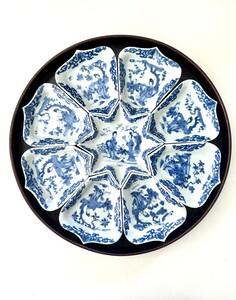



Kangxi period, c. 1700
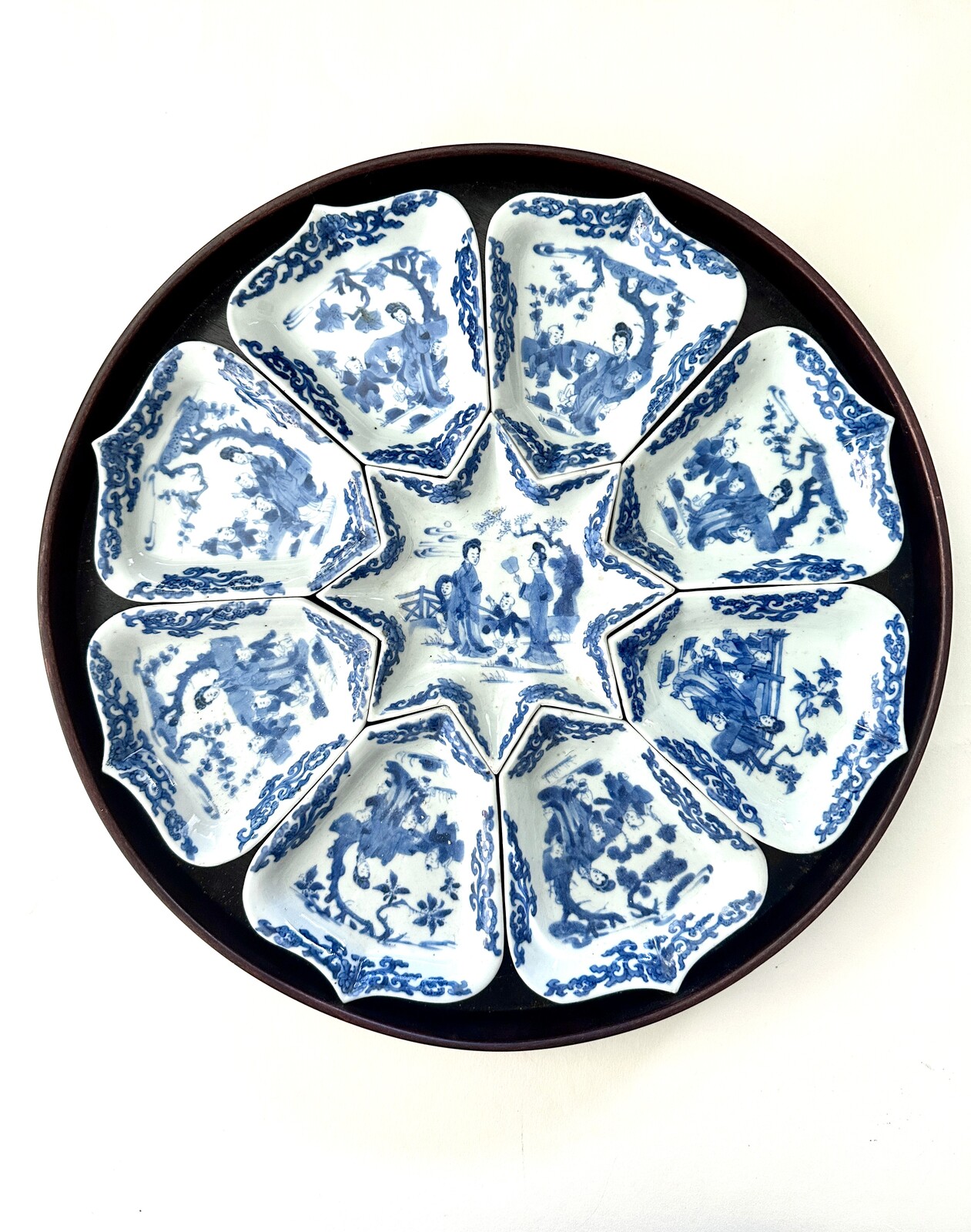
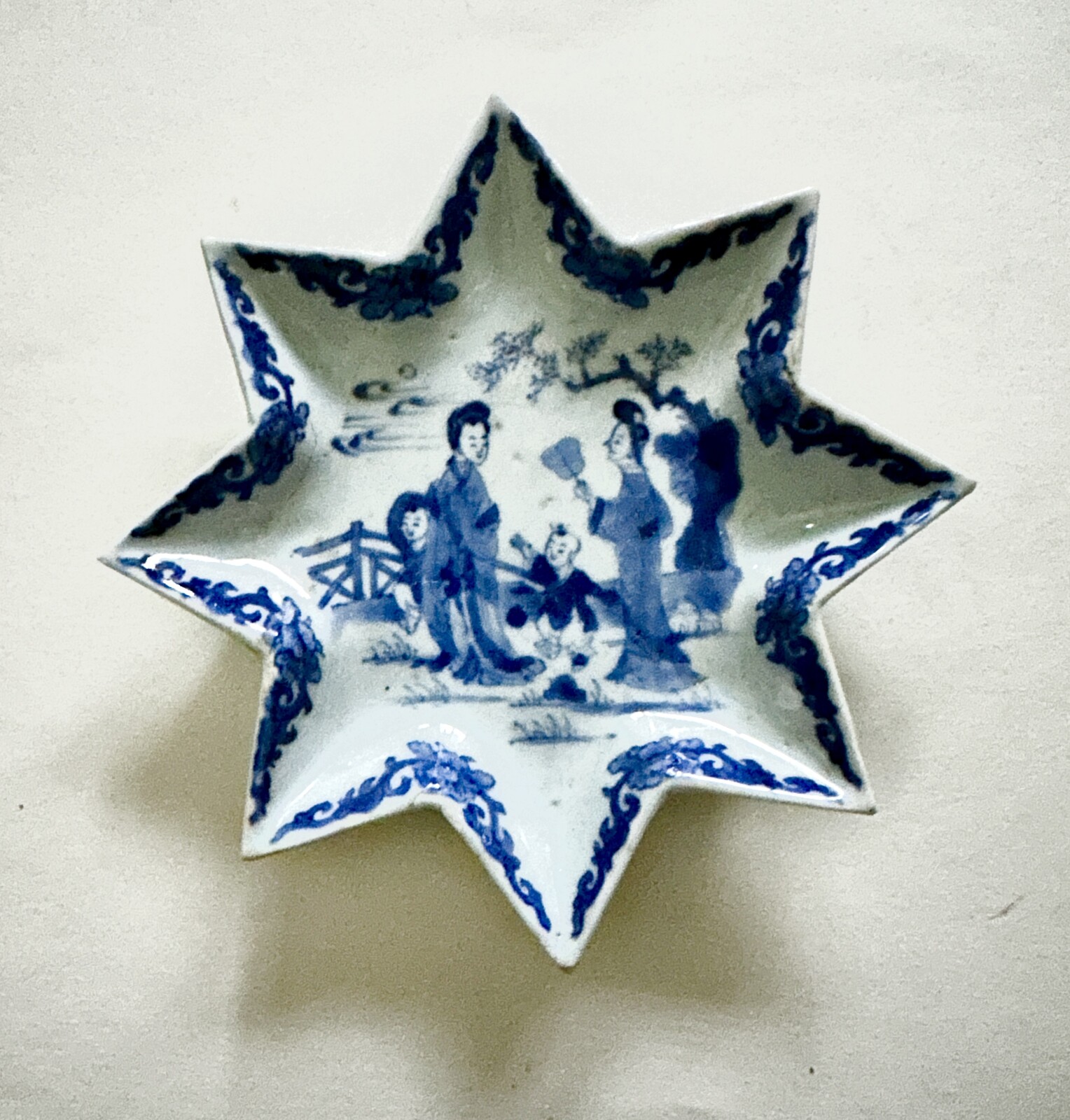
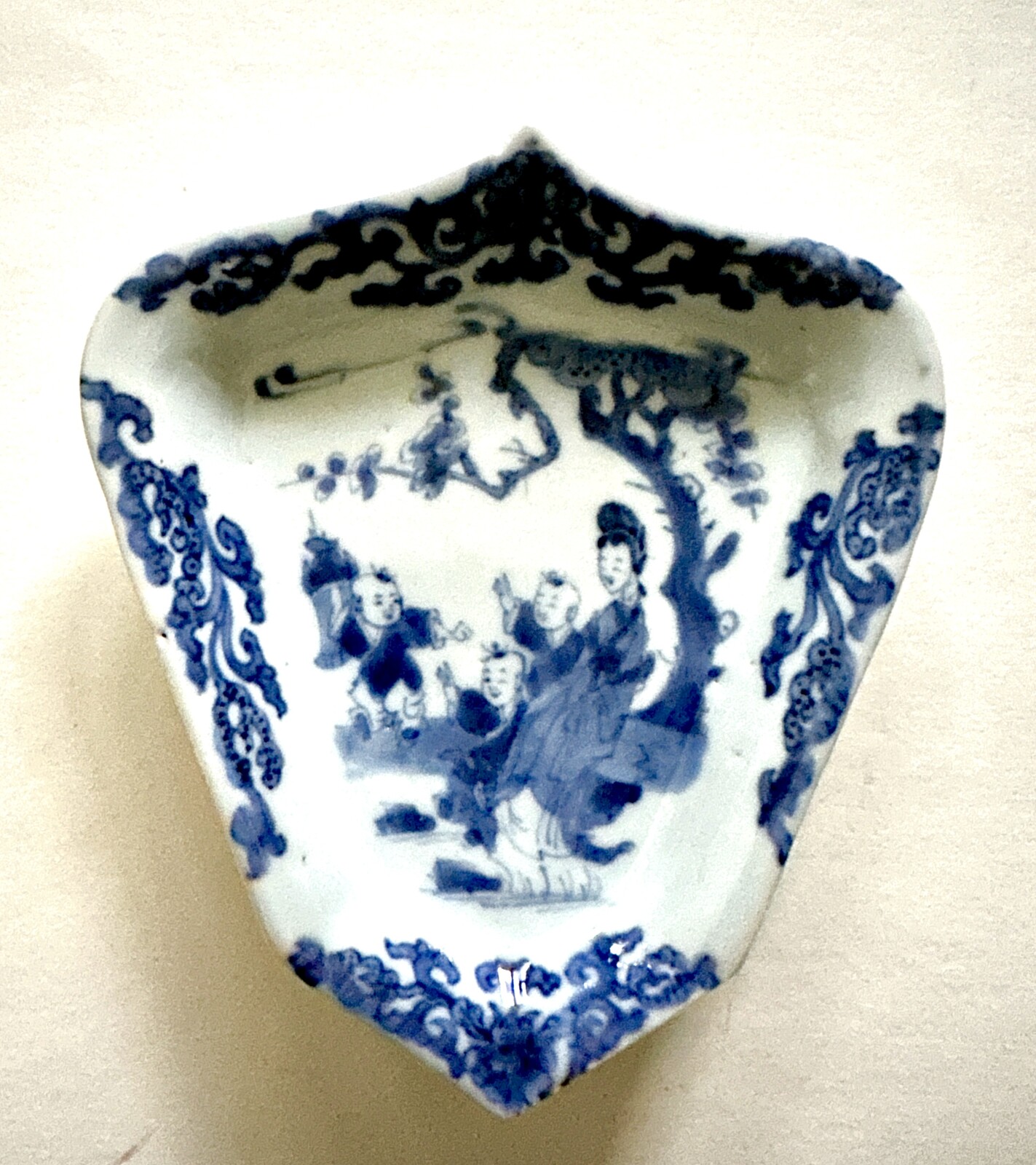
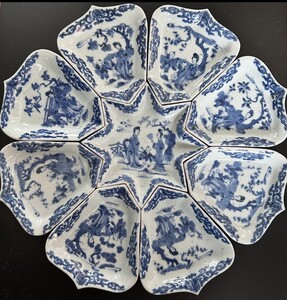
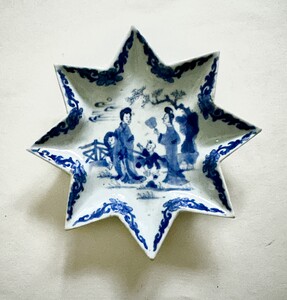
The set consists of a central star-shaped dish surrounded by eight lappet-shaped dishes, together forming a large flowerhead.
Each dish is decorated in underglaze-blue with one or two ladies and boys at play, all under a blossoming tree in a fenced garden. The rims are painted with feathery scrolls.
Diameter 38 cm; in a wooden tray
A very similar set is in the Museum Princessehof in Leeuwarden, Accession No.LY0577 (see image 7)
The primary use of Chinese sweetmeat dishes is to serve various ‘sweetmeats’, such as dried fruits, nuts, and other delicacies, during dinners or tea drinking and especially for festive events like the Chinese New Year, to host family and friends.
As part of complete sets, they were both functional and decorative, on display on the table an interesting conversation piece.
Often there is a mutual influence of Chinese, Japanese, and Western cultures, in the shapes as well as in the decoration (see the Japanese dish on image 5).
In the late 17th-early 18th century, similar sets appeared in Delftware, highly inspired by Chinese examples.
It is interesting to notice that such sets may have been inspired by the small Japanese dishes used in Japan for the tea ceremony and its associated meal, 'kaiseki', and which were exported to Europe around 1670.
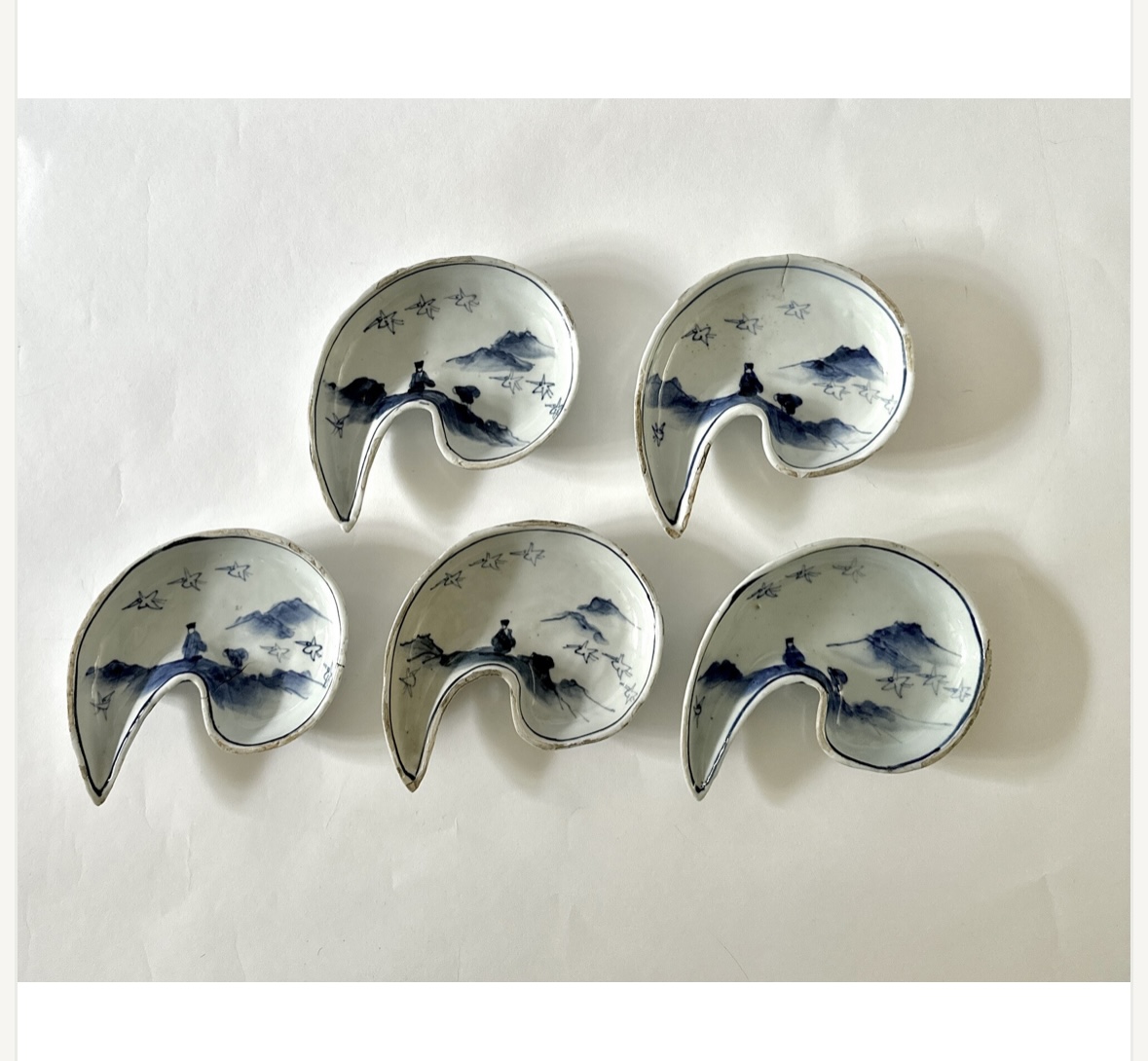
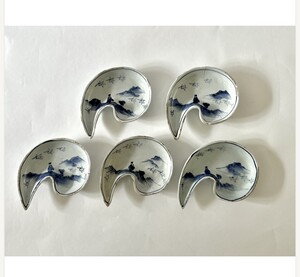
During the late Ming dynasty, such dishes were produced in China for the Japanese market, mainly in the Tianqi and Chongzhen periods (1620-1644), often in sets of five.
The fanciful shapes and often eccentric asymmetrical shapes and deliberate 'imperfections' were designed to suit the Japanese taste and would appeal to the teamasters (see our recently sold set in image 6).
BF 101 清康熙 青花仕女童子紋攢盤
c. 1700
此套器由一件星形瓷碟為中心,外圍配八片蓮瓣形小盤,組合後呈一朵盛開的花形攢盤。各盤皆以青花繪飾花樹、仕女與童子。盤沿繪卷草紋。
一組極為造型相近的青花攢盤藏於呂伐登公主庭院陶瓷博物館(藏品編號 LY0577,見圖 7)。
直徑38公分,附木托。
