Tang dynasty (618-907)
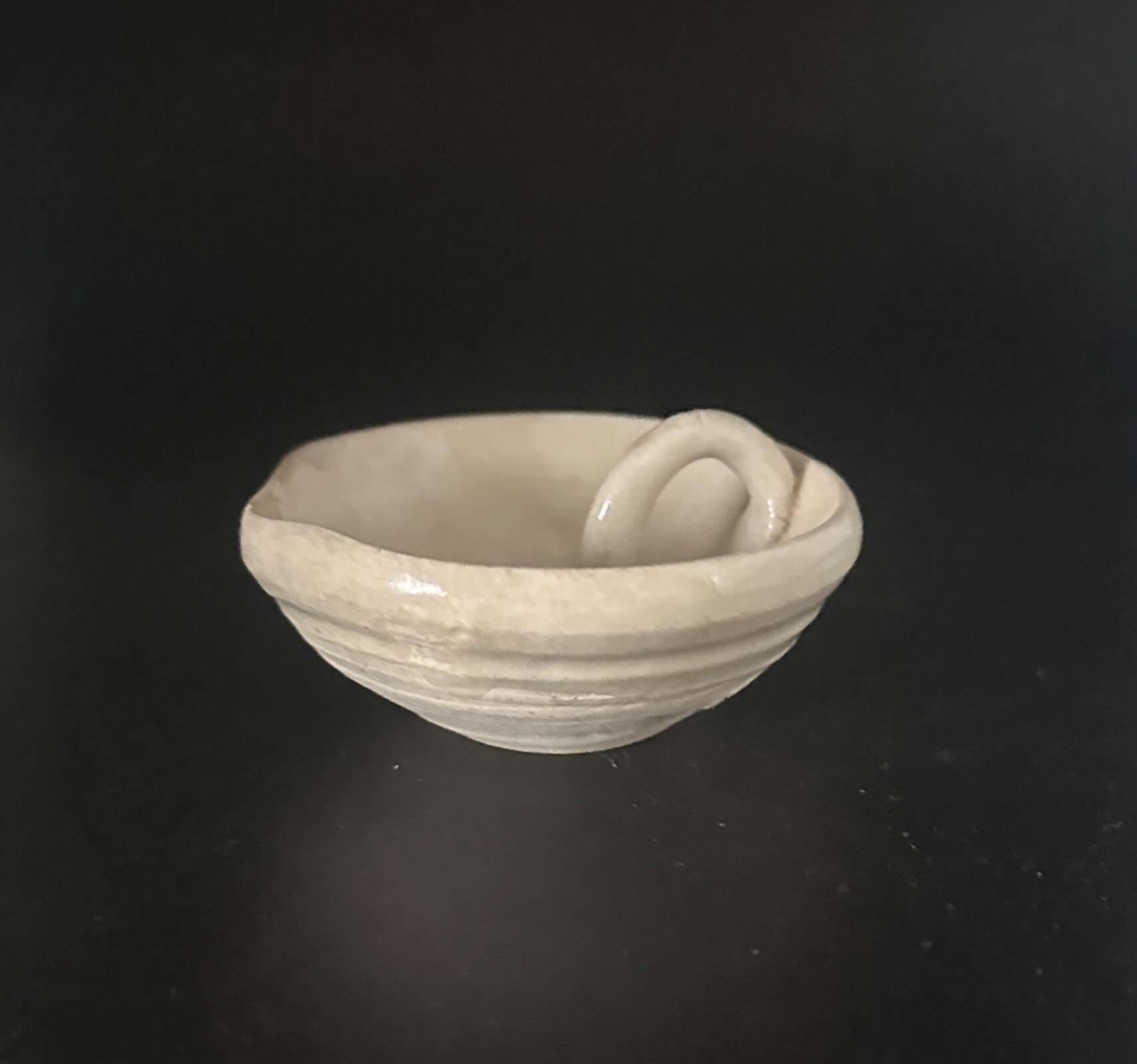
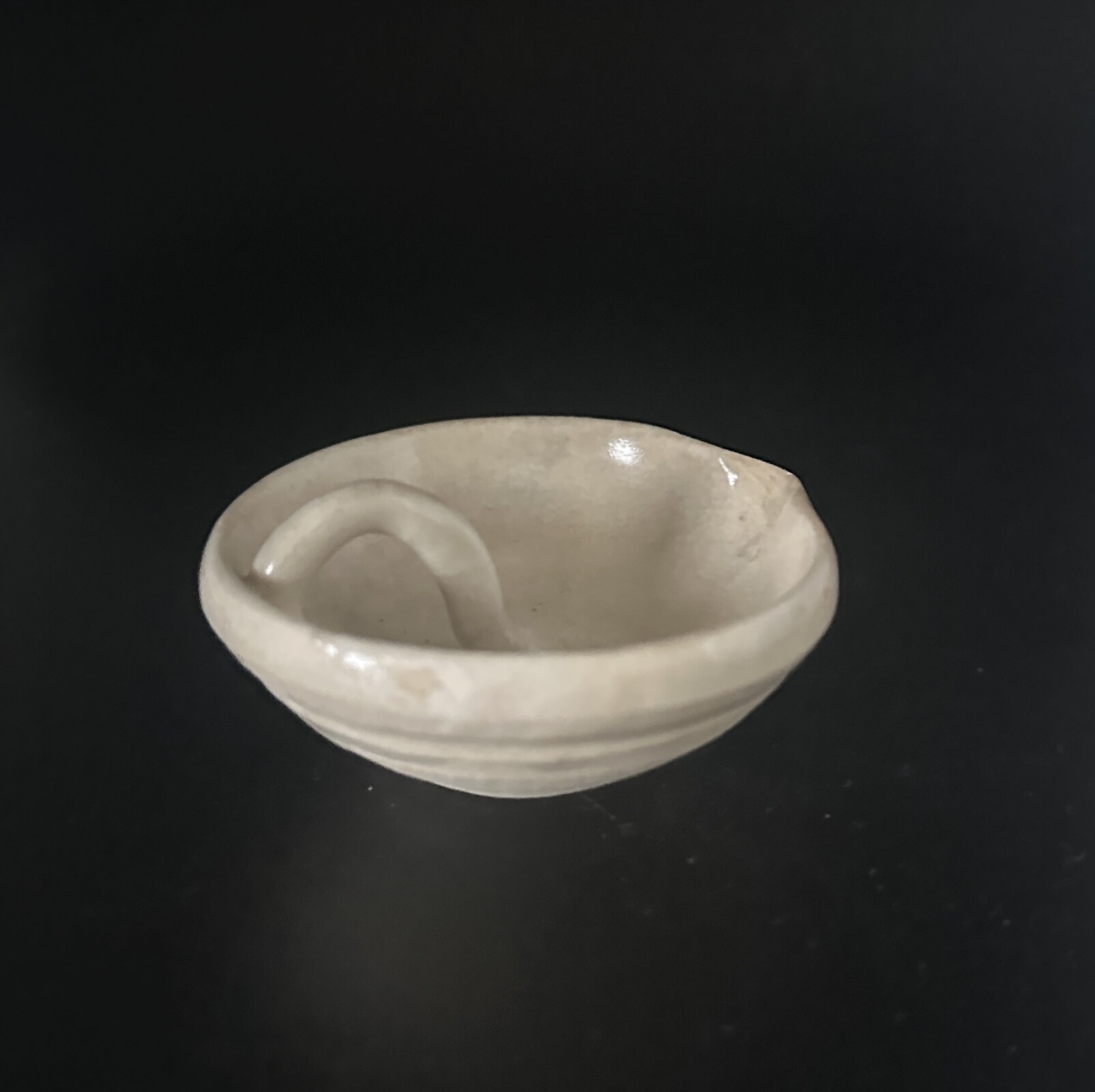
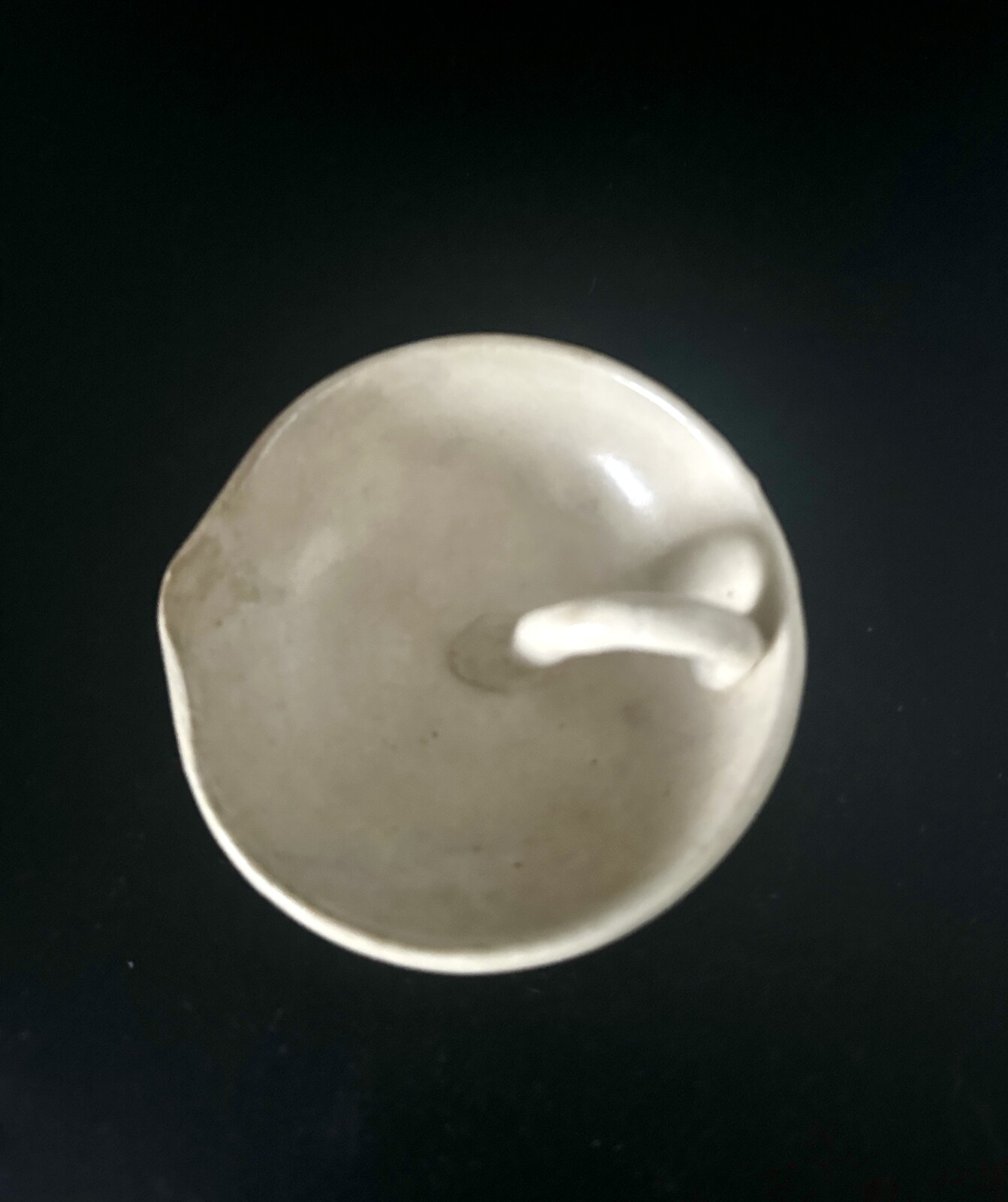
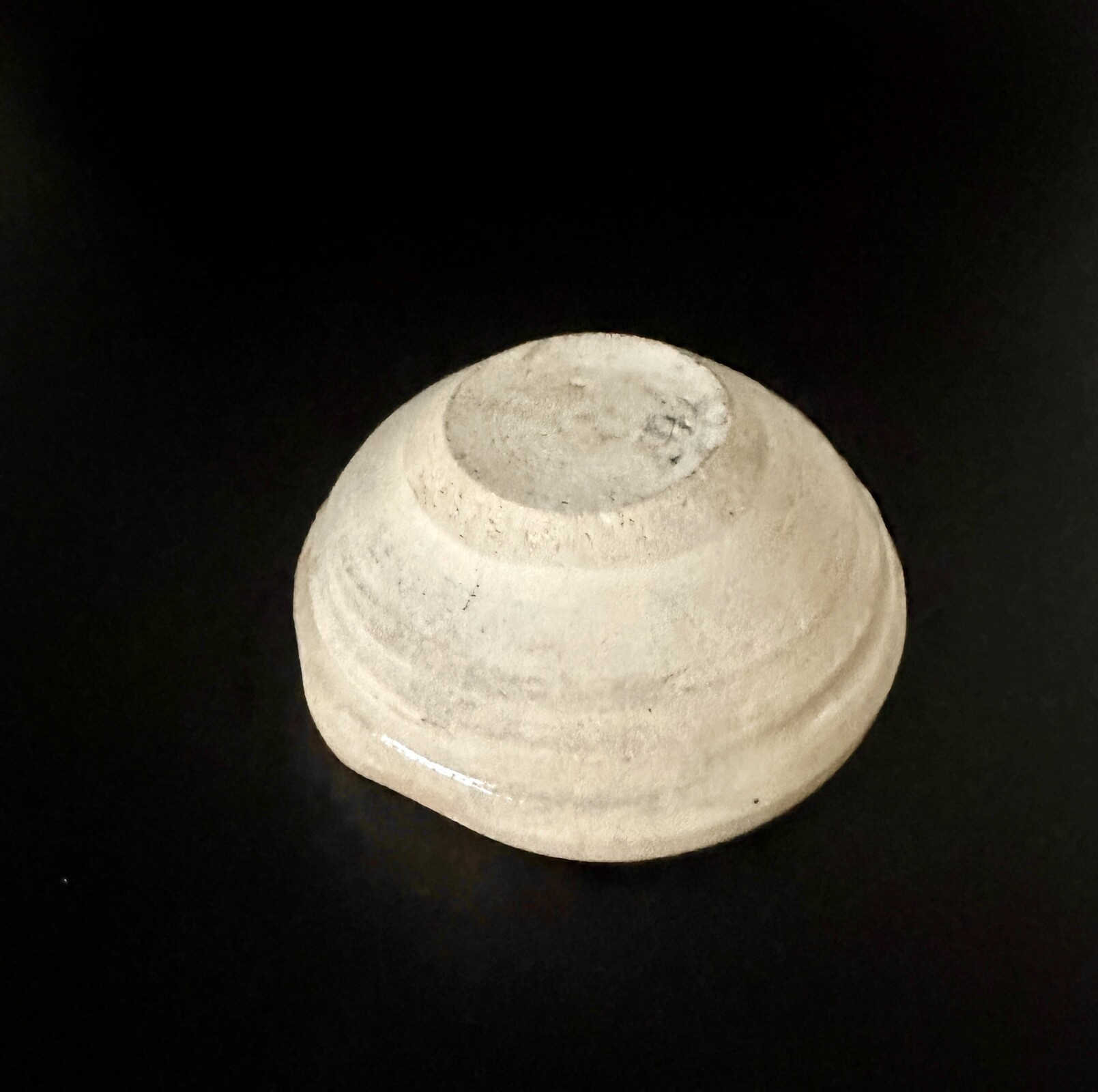
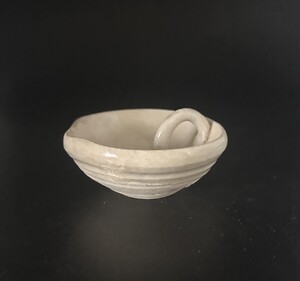
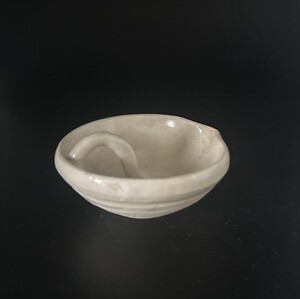
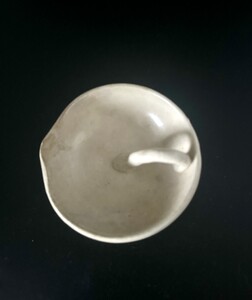
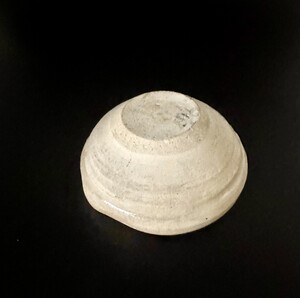
The lamp is shaped as a footless bowl of open form with rounded sides rising towards a lipped rim with short spout. It is applied on the interior with an arc-like handle. The inside is covered with a finely crackled creamy white glaze, and covering three ribs on the outside, stopping halfway, leaving the lower part and flat base unglazed.
Diameter 7.7 cm
Provenance: Sotheby's Amsterdam, 25 October 1994, Lot 173
Chinese ceramic oil lamps were not only used for practical purpose, but were also placed in tombs to light the deceased during their voyage to the afterlife. The quality and material would indicate a person's wealth and status.
When used in daily life, the body of the lamp is filled for about two-thirds. A wick is placed in the spout, with one end submerged in the oil, the other end extending out and lighted to ignite the fuel. After the oil is drawn up the wick, it will burn to create light.
Similar oil lamps dating from the Tang dynasty are also known in Yue wares. See one excavated in 1975 at the site of the capital Yangzhou in Jiangsu province, illustrated in Wenwu, 1977, no.9, p.24, fig. 9
EF 18 唐 白釉燈盞
此油燈盞作無足碗形,圓腹,短流。碗內貼飾弧形把手。內壁施開片細密的乳白釉,外側覆釉於三條棱脊紋上,釉層於半腹收止,其下部與平底皆露胎。
來源:阿姆斯特丹蘇富比,1994年10月25日,拍品編號173
直徑 7.7 公分。
