Chongzhen-Shunzhi, circa 1640-1650
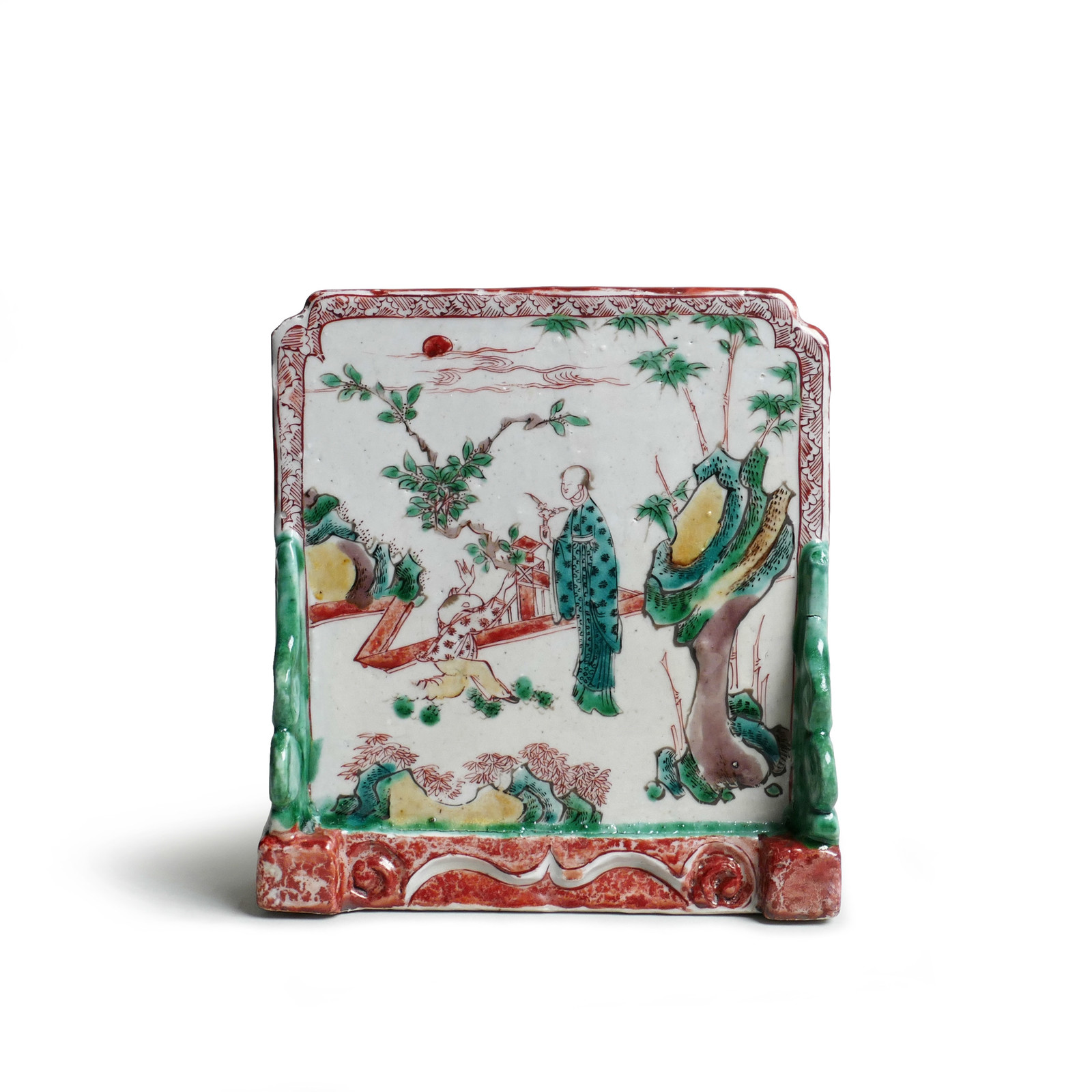
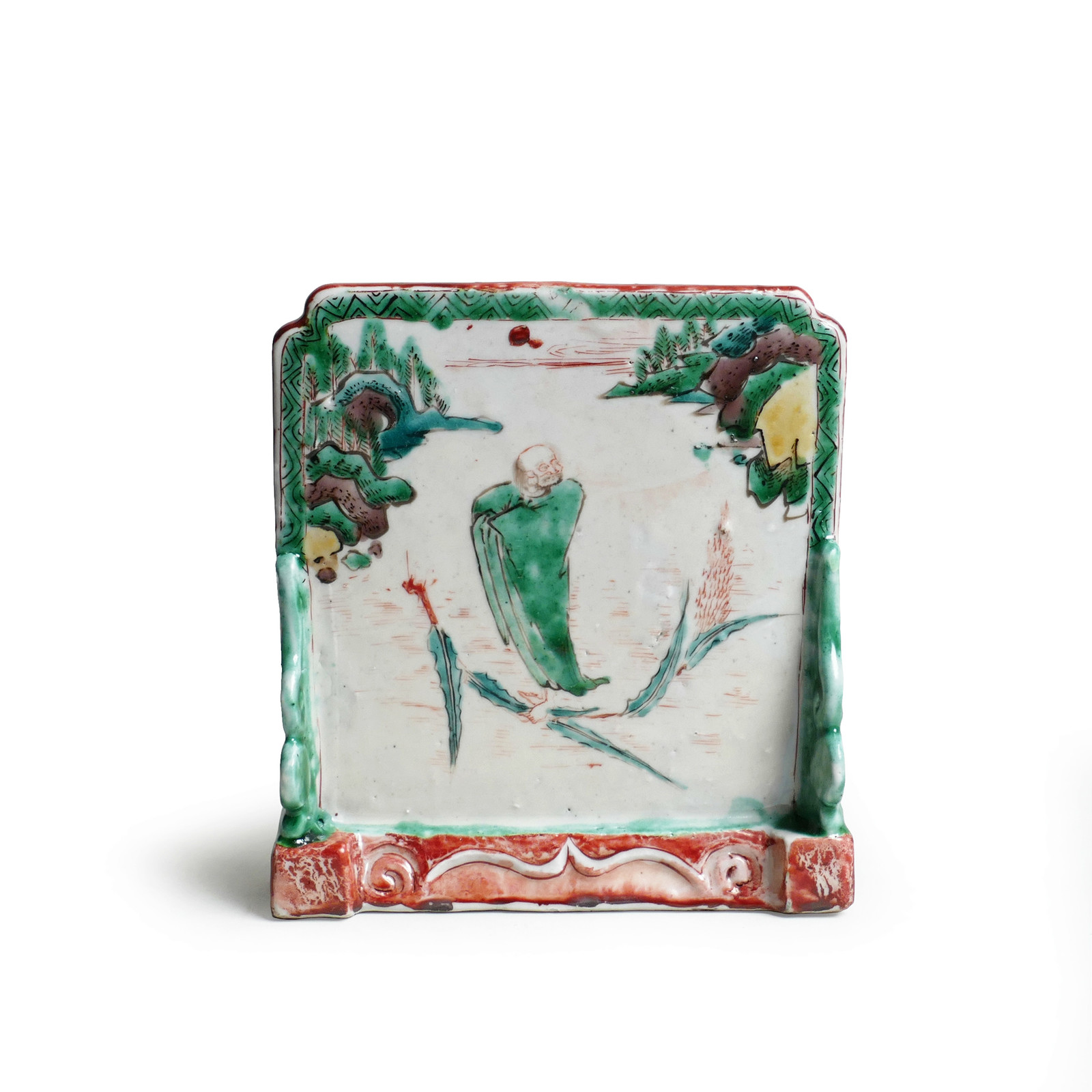
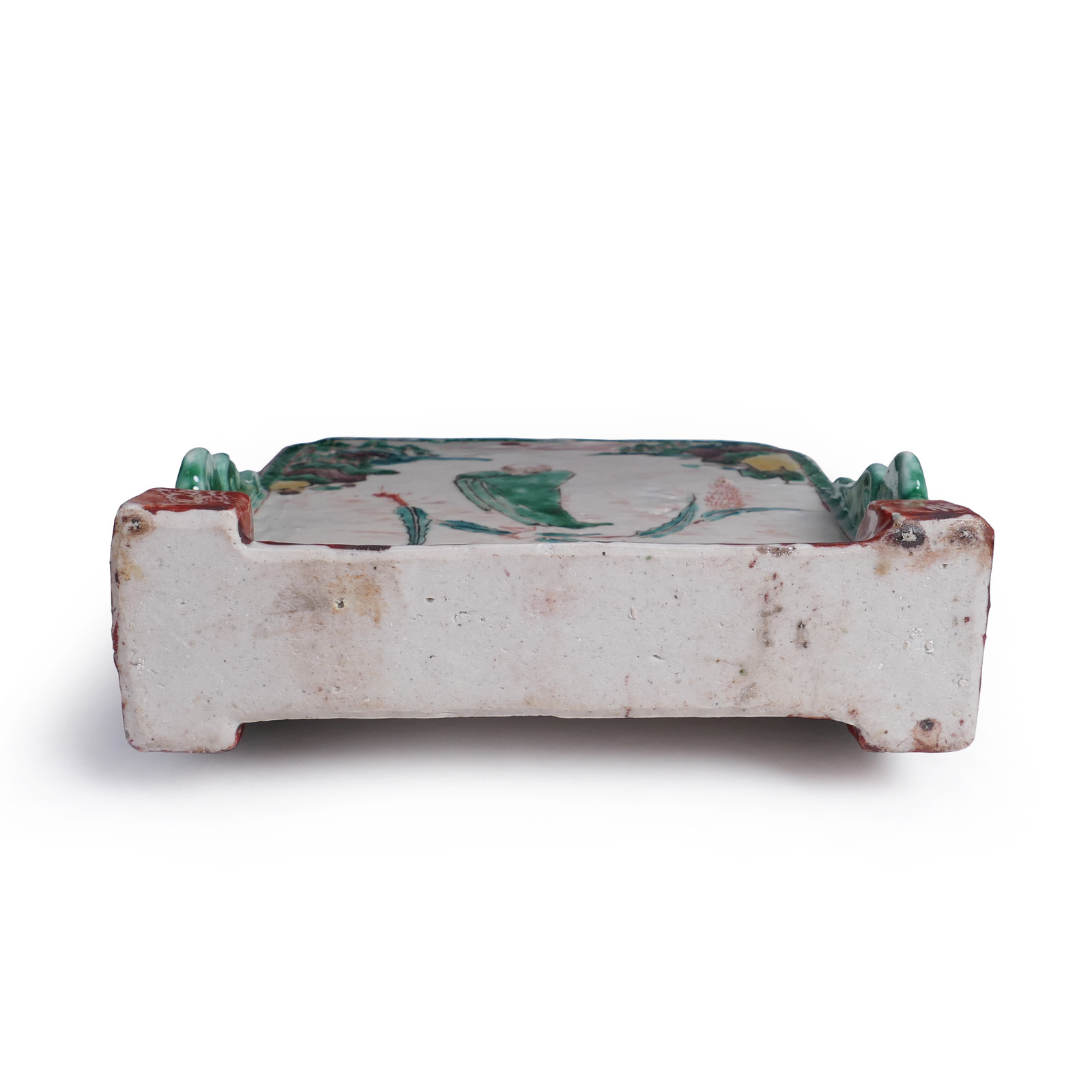
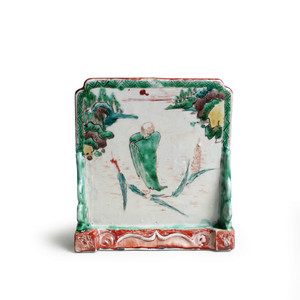
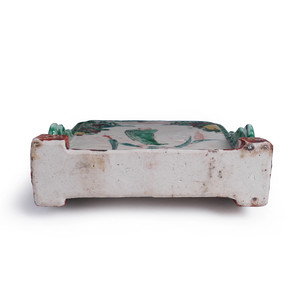
The rectangular screen with indented corners is set on a simulated stand with two upright supports. One side is painted in green, yellow, aubergine and turquoise enamels and iron-red with a lady and a boy in a terraced garden amidst rocks, bamboo and a tree, all below a sun or moon and wispy clouds. The lady is standing beside a strange-looking rock and holds a lingzhi in her right hand. The other side is painted with Damo standing atop a large reed and floating down a river with rocky shores, below a distant sun or moon and clouds. He is wearing long robes, his hands folded under the sleeves, and looking over his left shoulder. Both scenes are framed within zigzag borders. The flat base is left unglazed.
17.5 cm high
Table screens were used on the scholar’s desk to shield the inkstone from wind and direct sunlight, which would dry out the ink (1). Not only were they functional, they also were highly decorative and made from a variety of materials including wood,marble, lacquer, jade and porcelain.
The painting on the present table screen shows characteristics of the ‘high-Transitional’ style, like layered rocks and v-shaped grass. The enamels are reminiscent of Ko-akae wares for Japan (2), but the quality of the painting and the type of object strongly indicate production for the home market. This is further exemplified by the depiction of Damo, or Bodhidharma, who was highly revered by the Chinese. The Indian Buddhist missionary reached China in AD 526 and is regarded as the chief of the Six Patriarchs of the Buddhist religion (3).
Transitional porcelains made for the domestic market, decorated in overglaze enamels only, are very rare, and even more so when turquoise enamel is added (4). A similar enameled table screen, painted only on one side and set with two cylindrical brush holders on the other, as well as a blue and white example, are in the collection of the Ashmolean Museum (5). Blue and white porcelain table screens with integrated brush holders and decoration in high relief were also made during the Wanli period (6). There are Longquan-celadon table screens of earlier date, like an example of closely related shape in the Percival David Collection, which is dated by inscription to 1492 (7).
Provenance: Acquired from Roger Keverne, London
Formerly in a French private collection
- Flacks,M., Custodiansof the Scholar's Way: Chinese Scholar's Objects in Precious Woods, London 2014, p. 104
- Curtis, J.B., Trade, Taste and Transformation- Jingdezhen Porcelain for Japan, 1620-1645, New York 2006, pls. 67,68
- Williams,C.A.S., Outlines of Chinese Symbolism & Art motives, New York 1976, pp. 388-389
PFE 13 明崇禎至清順治 彩繪桌屏
時代:明崇禎至清順治,約1640至1650年。
特徵:方形桌屏,上端有兩個倭角。一側描繪花園內的女士與男孩,另一側則畫達摩一葦渡江。底座下方未施釉。
尺寸:高17.5公分。
來源:自倫敦Roger Keverne獲得。原為法國私人收藏。
